Want customers to think of your business before your competitors? One channel reportedly delivers $36 for every $1 spent, but only if you avoid the mistakes that make most local newsletters fizzle out after a few issues. Here's the step-by-step fix.
Key Takeaways
Building a local business newsletter from scratch involves strategic planning, list building, content creation, and legal compliance, all working together to keep customers engaged over time.
Email marketing has been cited as delivering an average ROI of $36 for every $1 spent, making it one of the most cost-effective channels available to local businesses.
A good open rate for a business newsletter generally falls between 20 and 30 percent, and that number is one of several worth tracking over time.
Email marketing laws like the CAN-SPAM Act require a visible unsubscribe option and a real postal address, with the maximum civil penalty for a violation reaching $53,088 per email.
MomentumPilot Agency offers fully managed newsletter plans that handle writing, design, hosting, and delivery so local business owners do not have to build the process alone.
Building a newsletter for a local business breaks down into a handful of manageable steps: strategy, list building, content, legal compliance, and tracking results. Local business owners who commit to this process end up with one of the most reliable ways to stay in front of customers between visits or purchases.
Why Newsletters Still Drive Growth
Email still beats most other channels for reaching people directly. Nearly everyone checks their inbox daily, and many younger customers actually prefer getting business updates through email over texts or social posts. A newsletter lands directly in front of a customer rather than competing for attention inside a social feed.
The return on this kind of effort is hard to ignore. Email marketing has been cited as delivering an average ROI of $36 for every $1 spent, a figure that puts it ahead of most paid advertising options available to small, local businesses. A consistent newsletter keeps a company visible during the stretches between purchases or appointments, which is exactly when customers start considering a competitor.
Local business owners face a common challenge: staying in touch with customers without having to become a copywriter, designer, and email technician all at once. The guide below walks through the same steps a business would take whether building a newsletter solo or handing the work off to someone else.
Set Your Strategy First
A newsletter without a plan tends to fizzle out after three or four issues. Before writing a single word, a business owner needs to settle on what the newsletter is supposed to accomplish and who it needs to reach.
Define Goals and Audience
Goals shape everything else about a newsletter, from tone to frequency to what gets featured. A landscaping company trying to fill slow winter months has different goals than a dental office trying to reduce no-show appointments, and each needs a different mix of content.
Audience matters just as much as goals. A useful exercise is picturing the actual person reading the email:
A repeat customer who already trusts the business and just needs reminders and useful tips
A past customer who hasn't purchased in a while and needs a reason to come back
A prospective customer who signed up but hasn't bought anything yet
Each group responds to different messages, which is part of why segmentation, covered later in this guide, becomes so valuable once the list grows.
Choose a Sending Frequency
Frequency is a commitment, a fundamental choice rather than a casual preference. Sending weekly builds stronger habits with readers but takes more time and content; sending monthly is easier to sustain but risks the business fading from memory between issues.
A simple rule works well for most local businesses just starting out: pick the frequency that can realistically be sustained for a full year without burning out. Monthly works well for businesses with limited content to share, while weekly fits companies with frequent promotions, seasonal changes, or regular community involvement worth reporting on.
Pick an Email Marketing Platform
The platform chosen determines how much manual work goes into every single send. Popular options for small businesses include Mailchimp, Constant Contact, Brevo, MailerLite, and AWeber, all offering templates, automation, and list management tools built for non-technical users.
Pricing varies quite a bit depending on list size and features. Many of these platforms offer free or low-cost plans for smaller lists, often under 500 contacts, which makes them approachable for a business just getting started. Costs climb as the subscriber count grows or as automation and design features get added, so it's worth checking pricing tiers against where the list is expected to be in a year, not just where it stands today.
Build Your Subscriber List
A newsletter is only as valuable as the list of people reading it. List building deserves as much attention as the content itself, since even the best-written email does nothing if nobody opens it.
Offer an Incentive to Sign Up
People rarely hand over their email address for nothing. A small incentive, like a discount on a first purchase, an exclusive guide, or early access to a seasonal offer, gives visitors a reason to join the list instead of scrolling past the sign-up box.
The incentive should connect directly to what the business does. A bakery might offer a coupon for a free pastry with a first order, while a law firm might offer a short guide answering a common legal question. Either way, the incentive should feel useful enough that signing up feels like a win, not a chore.
Add Sign-Up Forms Everywhere
A sign-up form tucked away on one page rarely grows a list very fast. Forms work best when they show up everywhere a potential subscriber might already be paying attention:
On the website's homepage and footer, where every visitor can see it
As a targeted pop-up triggered after a visitor spends some time browsing
On social media profiles and in posts promoting the newsletter directly
At checkout or during appointment booking, for businesses with in-person transactions
On printed receipts or business cards, for walk-in customers
A strong email list is often described as the single most valuable owned marketing channel a business has, since it offers direct access to an audience without depending on social media reach or search rankings.
Create Content Worth Opening
Content is where most local business newsletters either earn a long-term reader or lose one for good. The goal is giving readers something worth their time, rather than another sales pitch landing in their inbox.
Balance Tips, Promotions, and Community News
Newsletters that only promote sales get ignored or unsubscribed from fairly quickly. Readers stick around when a newsletter mixes genuinely useful material with the occasional offer. A strong content rotation might include:
Expert tips tied to the business's specialty, like seasonal maintenance advice or common mistakes to avoid
Seasonal promotions timed around holidays, slow periods, or new product launches
Community news, such as local events, sponsorships, or neighborhood happenings
Answers to frequently asked customer questions
Behind-the-scenes glimpses of the business or team
Short client success stories that show real results
The best-performing content tends to prioritize value over self-promotion, focusing on what's relevant and timely for the reader rather than constant pitches.
Write Subject Lines That Get Opened
A subject line decides whether an email gets opened at all. Well over a third of recipients make that decision based on the subject line alone, which makes this single line of text worth real effort.
Short, specific, and curiosity-driven subject lines tend to outperform generic ones like "Monthly Newsletter." A line such as "3 Ways to Cut Your Water Bill This Fall" tells the reader exactly what's inside and gives them a reason to click.
Personalize and Segment Sends
Personalization goes beyond dropping a first name into a greeting line, though that detail still matters. Tailoring content to match what a specific group of subscribers cares about creates a noticeably stronger connection than a generic blast.
Segmenting a list by location, purchase history, or interests allows a business to send more relevant messages to each group. A pet grooming business, for example, could send different content to cat owners than dog owners, or different offers to customers who haven't visited in six months versus regulars who come in monthly. This kind of targeting gives small businesses an edge that's hard to replicate with generic mass emails.
Follow Email Marketing Laws
Sending a newsletter comes with legal responsibilities that are easy to overlook but important to get right. In the United States, the CAN-SPAM Act sets the rules for commercial email, and similar regulations like GDPR apply for businesses reaching audiences in Europe.
These rules boil down to a few concrete requirements:
Include a real physical postal address in every email sent
Provide a clear, visible way for recipients to unsubscribe
Honor opt-out requests within the legally required timeframe
Avoid misleading subject lines or sender information
Skipping these steps carries real financial risk. The maximum civil penalty for a CAN-SPAM violation is $53,088 per email, which turns a seemingly small oversight into a costly mistake if a list grows large and compliance gets ignored.
Track the Metrics That Matter
Sending a newsletter without checking results is a bit like running a storefront with the lights off. A handful of metrics tell a business owner whether the newsletter is actually working.
The most useful numbers to watch include open rate, click-through rate, click-to-open rate, conversion rate, and unsubscribe rate. Open rate shows how many people are even seeing the subject line and deciding to look inside, while click-through rate shows whether the content inside is compelling enough to act on. A good open rate for this kind of newsletter generally falls between 20 and 30 percent, with anything above 40 to 50 percent considered excellent. Watching these numbers over several issues, rather than judging a single send, gives a much clearer picture of what content and timing actually connect with subscribers.
What It Costs to Run One
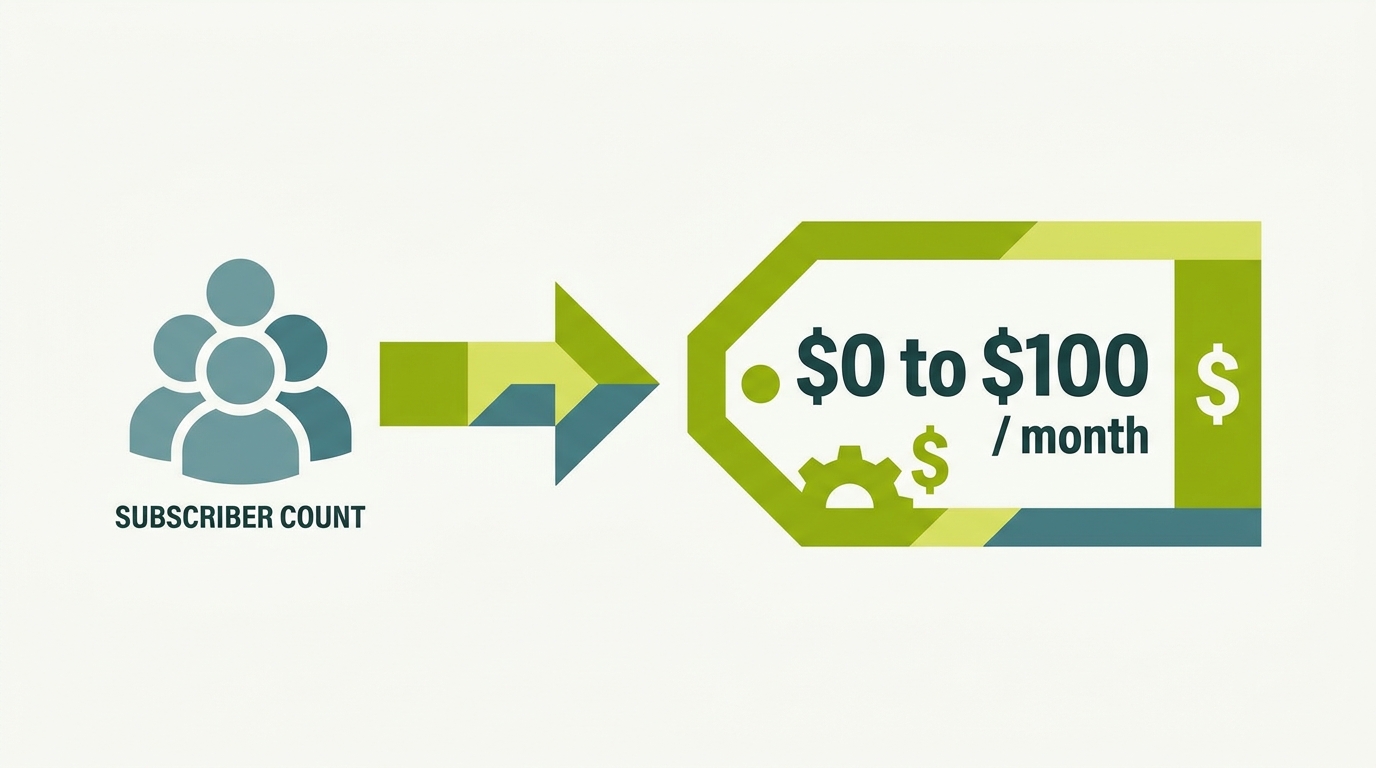
Costs for running a newsletter vary widely depending on how much of the work a business handles itself versus hiring outside help. Platform fees and list size play a big role, and bringing in a freelancer or agency adds another layer of cost on top of that.
Our fully managed newsletter plans are priced at $295 per month for a Monthly Newsletter plan, regularly $595 per month, and $195 per week for a Weekly Newsletter plan, regularly $395 per week, with both covering content writing, design, hosting, delivery to up to 1,000 subscribers, and list management. Comparing options side by side, whether that means a free plan on a basic platform, a freelancer charging by the project, or a managed service handling the whole process, helps a business owner match the cost to the time available.
Consistency Is the Real Advantage
None of these steps matter much without consistency. A newsletter that goes out like clockwork, whether weekly or monthly, builds a kind of trust that sporadic sending never manages to create. Readers start expecting the next issue, and that expectation keeps a business top of mind long after the last purchase.
The businesses that struggle with newsletters usually don't struggle with ideas. They struggle with finding the time to write, design, and send something polished on a regular schedule, month after month. That gap is exactly what pushes many local business owners toward either blocking off dedicated time each week or handing the recurring work to someone else entirely.
For a straightforward way to keep customers engaged without the extra workload, consider setting up a local business email newsletter built around consistent, valuable content from day one.