

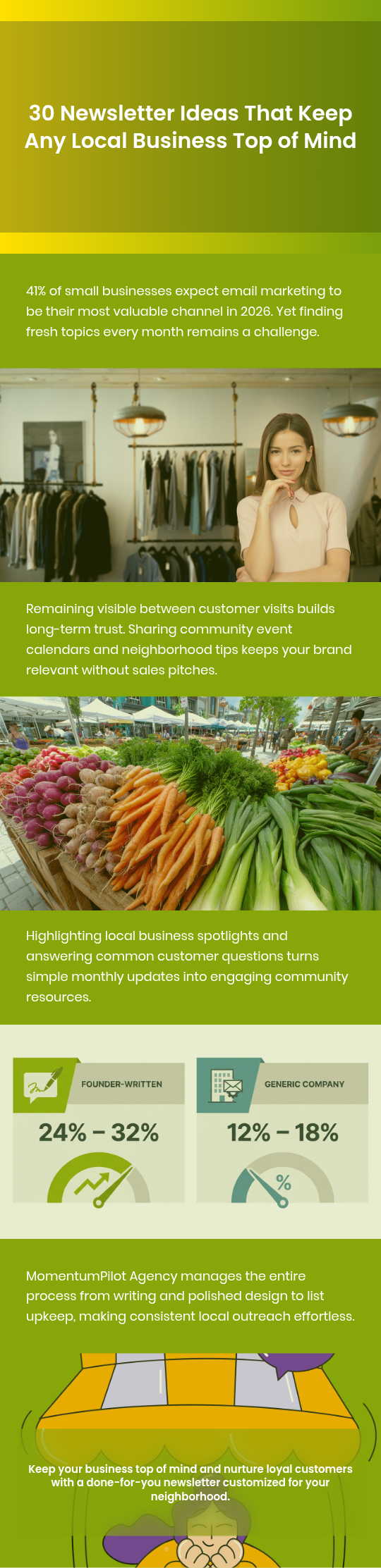
Your newsletter could be earning $36 for every $1 spent, or sitting ignored in an inbox. The difference comes down to one content mix most local businesses get wrong. See all 30 ideas that keep subscribers opening every edition.
Key Takeaways
A strong local business newsletter mixes educational tips, timely promotions, and local community news rather than relying on one type of content alone, which is the core question this piece answers
Email marketing is estimated to return around $36 for every $1 spent, making it one of the most cost-effective tools available to local businesses
Seasonal maintenance reminders and rebooking nudges can generate more appointments for service businesses when timed around real customer needs
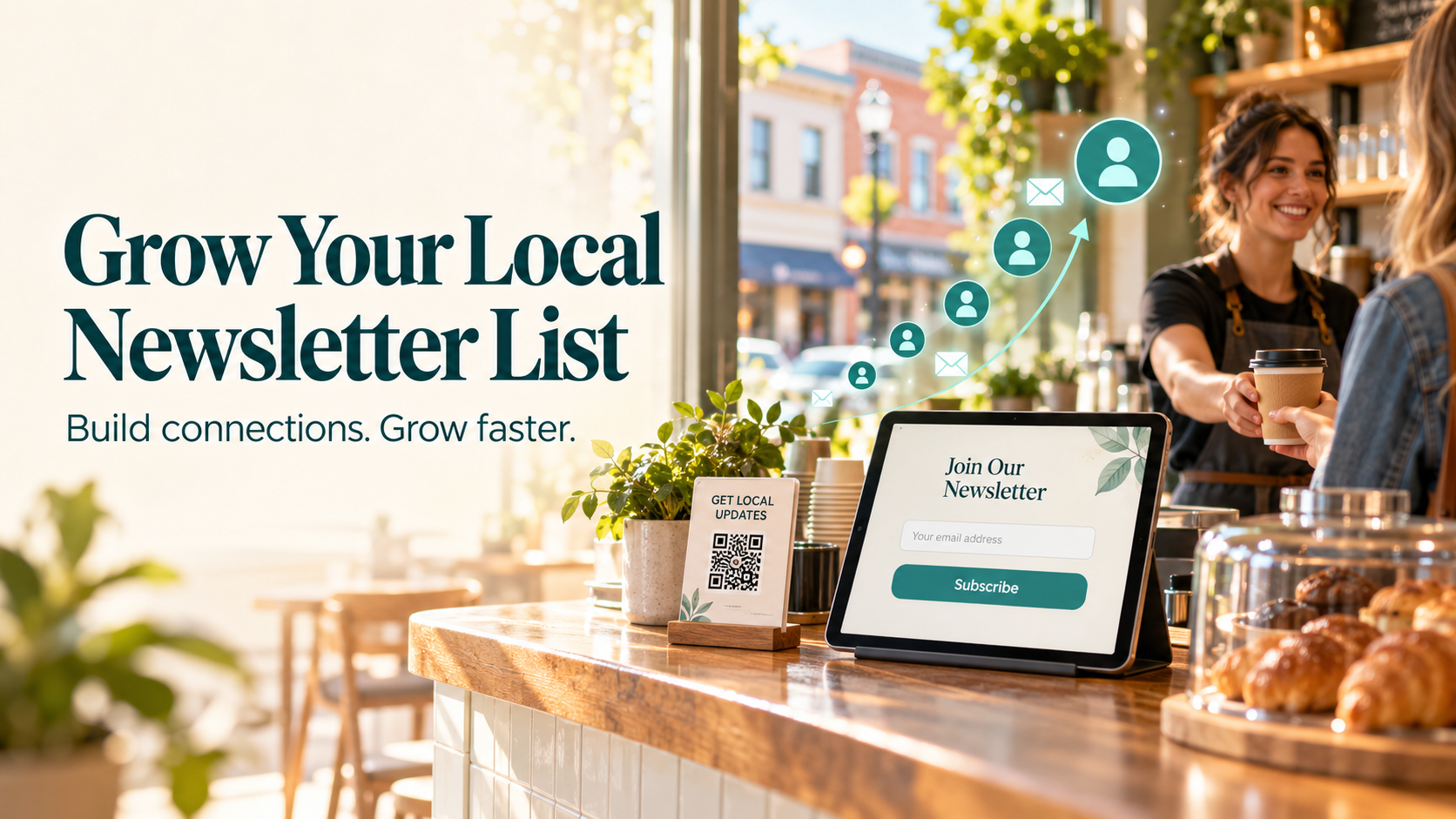
Newsletters work best when they feel customized for a business's own customers and community rather than generic filler
Finding the right mix and sending frequency matters just as much as the content itself, with pacing details covered later on
A newsletter sitting unread in an inbox does nothing for a business. A newsletter packed with the right mix of tips, deals, and local flavor keeps a business top of mind until the exact moment a customer is ready to buy again.
Why Newsletters Still Drive Business
Inboxes might feel crowded, but newsletters remain one of the few marketing channels a business fully owns. There is no algorithm deciding who sees it and no ad budget required to reach the list. Email marketing is estimated to return around $36 for every $1 spent, a figure that holds up because the channel goes straight to people who already chose to hear from a business.
That direct line matters most for local and service-based businesses, where trust and familiarity drive repeat visits. A customer who gets a useful tip or a friendly local update from a business starts to see that business as a neighbor rather than just a vendor. MomentumPilot Agency works with local businesses on consistent, varied newsletter content, built on the idea that staying visible between purchases is what turns one-time buyers into regulars.
The trick is variety. A newsletter that only pitches sales trains readers to skim past it, while one that only educates misses chances to prompt action. Blending tips, promotions, and local news keeps every edition feeling fresh and worth opening.
Educational Tips Customers Actually Read
Helpful content builds authority quietly. A customer who learns something useful from a business newsletter starts to trust that business's expertise long before the next purchase decision comes up.
Expert How-To Advice
Practical, step-by-step advice gives subscribers a reason to open every edition, not just the ones with a sale attached. A few reliable formats include:
A short how-to guide solving a common problem related to the business, like a plumber explaining how to spot an early leak before it becomes a flood.
A quick list of do's and don'ts for a task customers often attempt themselves.
A "myth versus fact" breakdown that corrects a misunderstanding common in the industry.
A simple checklist readers can save and use later.
A short explainer on new tools, products, or techniques relevant to the business's field.
Seasonal Maintenance Reminders
Timing matters as much as the tip itself. Sending a seasonal reminder, such as an HVAC tune-up notice before summer or a lawn care prep message before spring, can generate more booked appointments while reinforcing that the business thinks ahead on a customer's behalf. Useful seasonal angles include:
Pre-season maintenance checklists tied to the business's service.
Reminders about warranty deadlines or recommended service intervals.
Weather-related prep tips, like winterizing pipes or shading equipment during heat waves.
"Last call" messages before a seasonal offer or service window closes.
End-of-season wrap-ups that set expectations for the next cycle.
Answers to Common Customer Questions
Every business fields the same handful of questions on repeat. Turning those into newsletter content saves staff time answering them individually while showing prospects the business already understands their concerns. Strong formats include:
A rotating FAQ section featuring one or two questions per edition.
A "customer asked, here's the answer" format using real, anonymized questions.
Clarifications on pricing, scheduling, or policies that often cause confusion.
Short explainers comparing two options customers frequently debate between.
A glossary-style breakdown of industry terms customers encounter but rarely understand.
Promotions That Prompt Action
Promotions earn their place in a newsletter when they feel like a genuine value and not a pitch wedged between helpful content.
Sales and Special Offers
Discounts and limited-time offers remain a reliable way to turn newsletter readers into paying customers, especially when paired with a clear call to action. Effective promotional ideas include:
Subscriber-only discounts available nowhere else.
Flash sales with a short, clearly stated deadline.
Bundle deals that pair two services or products together.
Referral incentives rewarding customers who bring in a friend.
Loyalty-based offers reserved for repeat customers.
New Product or Service Announcements
A newsletter is a natural first stop for announcing anything new, since the audience already knows and trusts the business. Consider:
Sneak previews of an upcoming service or product before its public launch.
Behind-the-scenes photos of a new offering in development.
Early-access invitations for newsletter subscribers specifically.
Short explainers on how a new service solves a problem customers already have.
Customer polls asking which new offering they would like to see next.
Appointment and Rebooking Reminders
For service-based businesses, gentle nudges to rebook can fill the calendar without feeling pushy. Strong examples include:
"It's been a while" messages for customers overdue for a visit.
Easy one-click rebooking links for recurring services.
Reminders tied to manufacturer or industry-recommended service intervals.
Short notes on what happens if a routine service gets skipped.
End-of-visit follow-ups suggesting the next logical appointment.
Local News That Builds Community Ties
Local content turns a business newsletter into something a subscriber looks forward to, since it reflects the town or neighborhood they live in rather than a generic corporate update.
Community Events and Local Happenings
Sharing what is happening nearby signals that a business is genuinely embedded in its community, not simply selling to it. Reliable ideas include:
A roundup of upcoming local events, fairs, or markets.
Mentions of school activities or fundraisers relevant to the audience.
Weather or seasonal notes specific to the area.
Volunteer opportunities the business supports or recommends.
Updates on local government decisions that affect residents or customers.
Business Spotlights and Partnerships
Highlighting other local businesses builds goodwill and can turn into reciprocal promotion down the line. Worthwhile formats include:
A short interview or spotlight on a neighboring business owner.
A joint promotion with a complementary local business.
Recognition of a local partner's milestone, like an anniversary or expansion.
A "where we shop locally" feature naming trusted vendors or suppliers.
Cross-promotions where two businesses share each other's newsletter audience.
Trust-Building Content Beyond Promotions
Some of the most persuasive newsletter content never mentions a sale at all. It shows customers that the business is credible, consistent, and worth sticking with.
Customer Testimonials and Feedback
Real feedback from real customers carries weight that no amount of self-promotion can match. Worth including:
A short testimonial paired with a photo or first name for authenticity.
A "customer story" format showing a before-and-after outcome.
Direct requests for reviews, framed as helping other customers decide.
Shared survey or feedback results showing what customers value most.
Responses to past feedback, showing the business actually listens.
Behind-the-Scenes Business Updates
Letting customers peek behind the curtain humanizes a business and makes the newsletter feel personal rather than transactional. Strong options include:
Staff introductions or team milestones worth celebrating.
Photos from a recent project, event, or workspace update.
A short note on why the business operates the way it does.
Updates on new equipment, certifications, or training completed.
A founder's note sharing a lesson learned or a goal for the season ahead.
Finding the Right Mix and Frequency
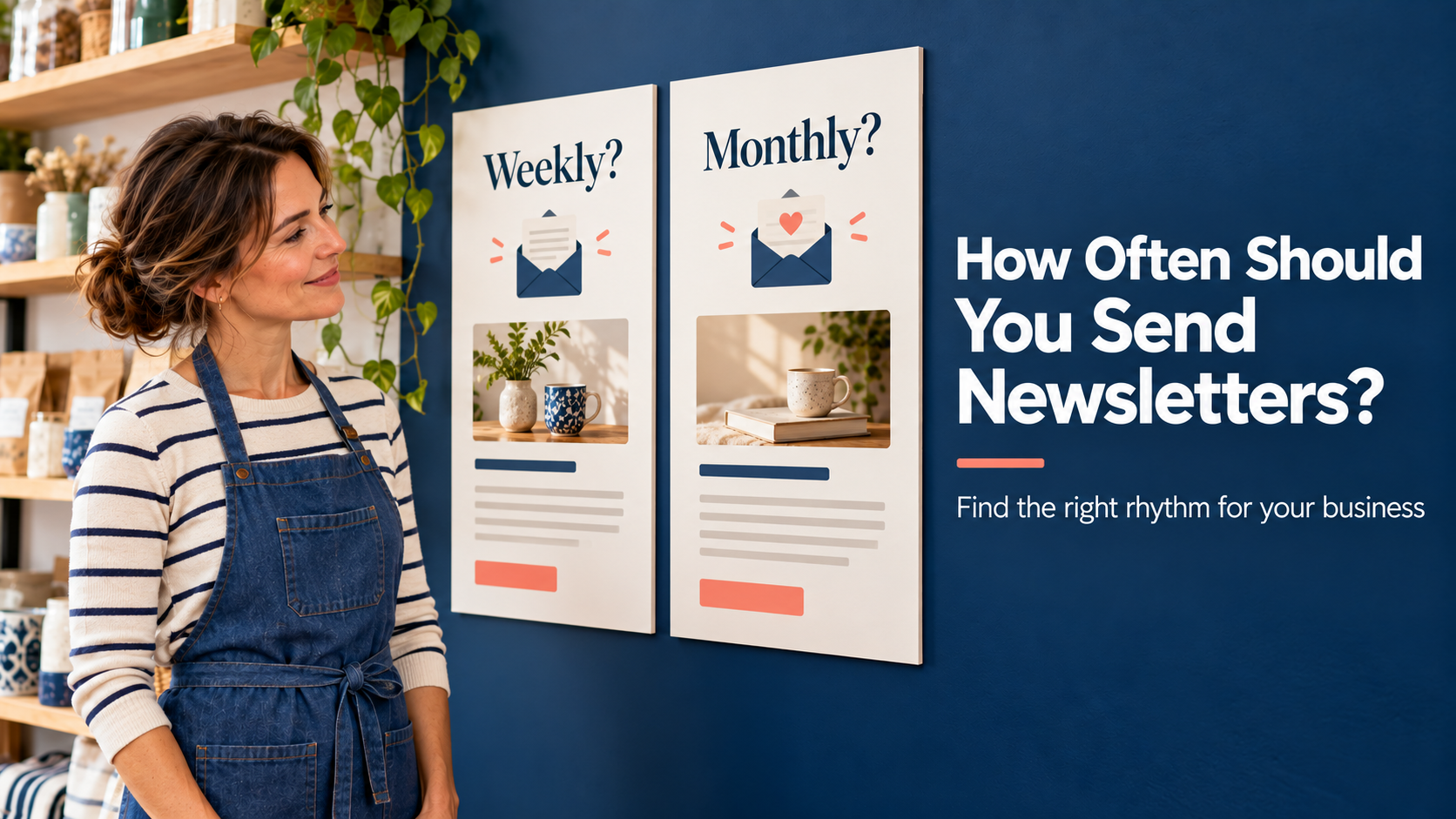
No single formula fits every business, but a workable starting point is a monthly newsletter that blends one piece of advice, one business update, and one timely offer. Retail-style businesses often benefit from a more frequent cadence, since weekly promotions keep momentum going, while service-based businesses tend to do better with a slower rhythm built around educational content every couple of weeks.
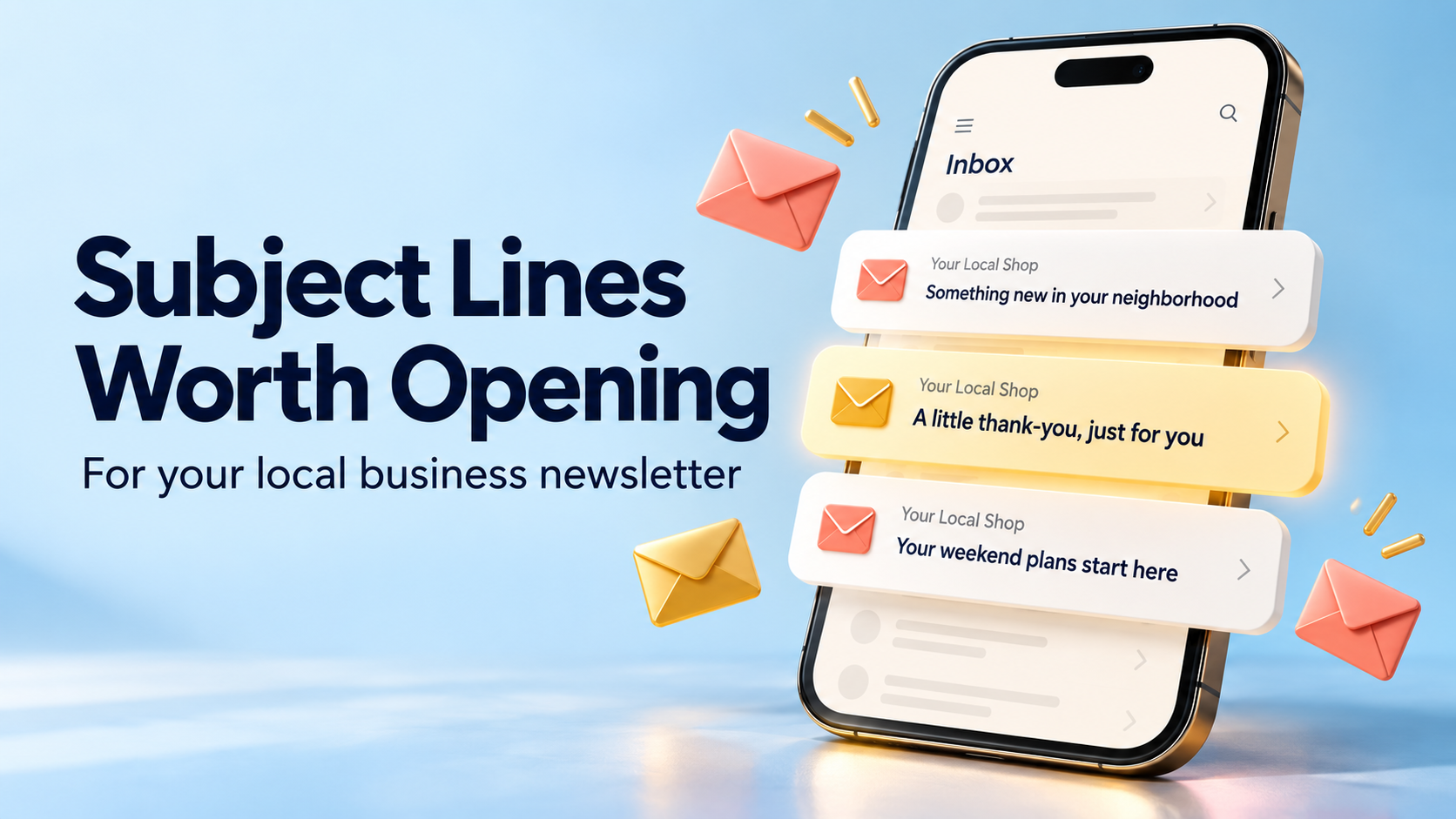
Whatever the pace, the content should skew toward value over constant self-promotion. A newsletter that reads like an ongoing sales pitch trains subscribers to stop opening it, while one that teaches, informs, and occasionally sells tends to hold attention edition after edition. Personalizing a message, even something as simple as addressing a subscriber by name or tailoring an offer to their past purchases, also tends to boost how engaged readers feel with each send.
Consistent Newsletters Keep Customers Coming Back
Thirty ideas is a lot to juggle, but the underlying principle is simple: mix education, promotion, and community connection, and send it on a schedule customers can count on. A newsletter that shows up reliably, with content that actually serves the reader, becomes a habit rather than an interruption.
For a local business short on time to write, design, and send that kind of newsletter every month, a done-for-you newsletter service can keep the schedule consistent without adding another task to an already full plate. Consistency, more than any single clever idea, is what turns a newsletter into a quiet, steady driver of repeat business.
Comments
No comments yet. Be the first to share your thoughts!
Leave a comment
Comments are reviewed before they appear. Your email is never shown.