Your newsletter could be brilliant and still get ignored because one word in your subject line might be silently tanking your open rates. One swap can shift opens by nearly 62%. Which word are you using wrong?
Key Takeaways
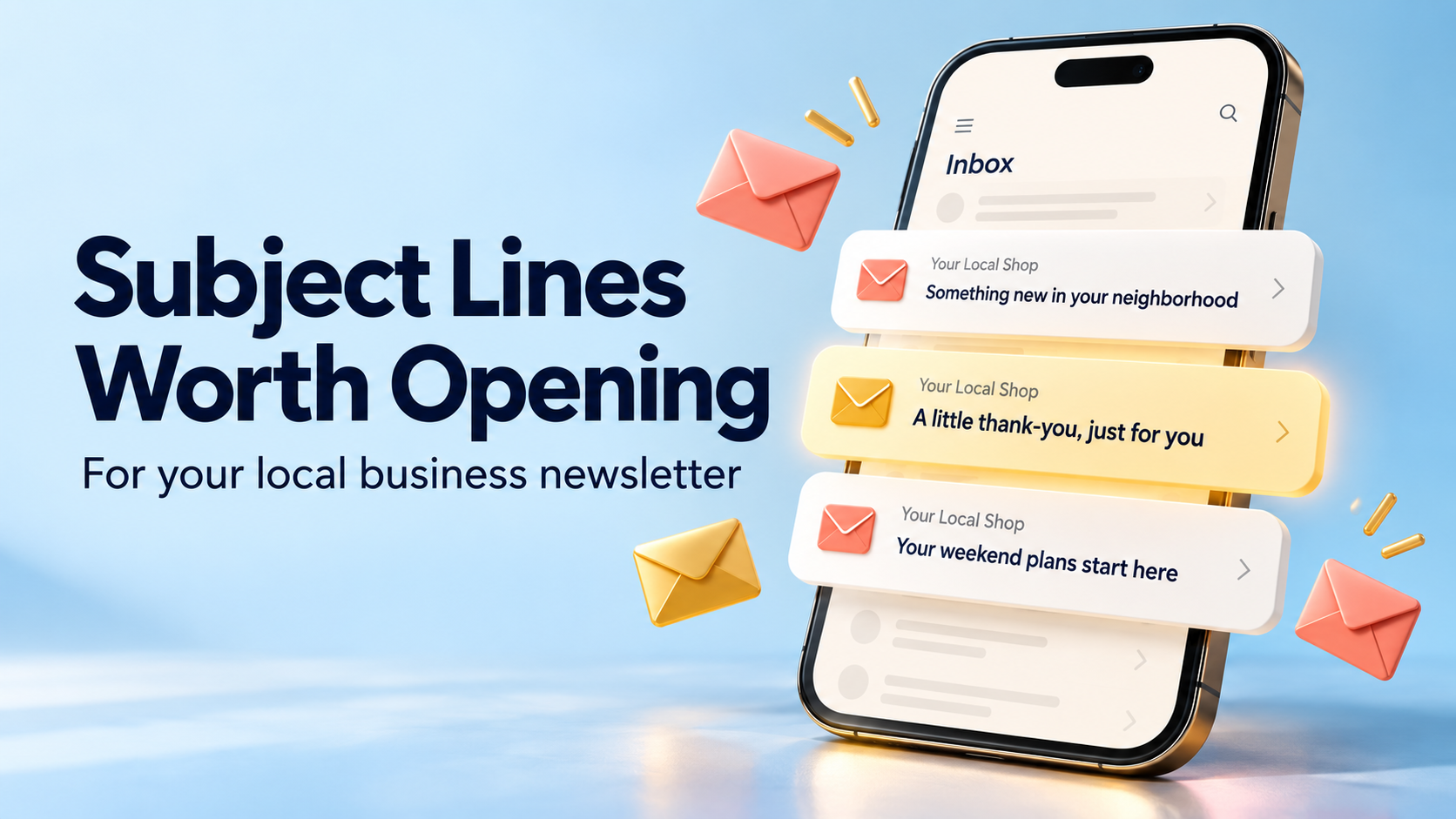
The quality of a subject line often decides whether an email gets opened at all, which makes those few words one of the highest-value pieces of copy a local business writes all month.
Personalized subject lines can increase open rates by 26-50% and click-through rates by 41%, yet most marketing emails still skip personalization entirely.
Short subject lines of 2-4 words tend to perform best for opens, while subject lines between 61-70 characters see the strongest open rates and 41-50 characters see the strongest click-through rates, so the right length depends on the goal of the send.
Simple word swaps, like avoiding generic labels and leaning on specific, benefit-led language, can shift whether a newsletter gets opened or ignored.
MomentumPilot Agency builds done-for-you newsletters for local businesses, handling the writing and testing that goes into subject lines readers actually open.
A newsletter can be packed with great advice, a timely promotion, and genuinely useful local news, and still get ignored. The reason usually comes down to one line of text sitting in an inbox: the subject line. Get it right, and a local business stays visible between visits. Get it wrong, and even the best content never gets seen.
47% Open Based On Subject Line Alone
The quality of a subject line often decides whether an email gets opened at all. That single idea explains why so much attention gets paid to a handful of words that, on the surface, seem small. For a local business sending a monthly or weekly newsletter, the subject line carries almost as much weight as the content inside it.
This detail deserves real attention rather than a rushed decision at send time. It's often the deciding factor between a newsletter that builds relationships over time and one that quietly piles up in a spam folder or a "later" pile that never gets revisited. MomentumPilot Agency works with local business owners on exactly this kind of consistent, tested communication, treating subject lines as a core part of newsletter strategy rather than an afterthought.
Local businesses that understand this tend to treat every subject line like its own small experiment. A plumber, a yoga studio, a bakery, and a law office each have different audiences, but the principle holds steady across all of them: the words chosen in that first line determine whether everything else even gets a chance.
Why Subject Lines Make Or Break Opens
A subject line works like a storefront window. People walking by decide in a split second whether to step inside, and an inbox works the same way, just faster and with far more competition for attention.
100+ Emails A Day: Standing Out Matters
The average professional receives 121 emails per day, and most of them never get fully read. Against that kind of volume, a newsletter has to earn its spot in a few words or get buried. This is especially true for local businesses competing not just with other local businesses, but with every retailer, service, and subscription list also fighting for the same inbox real estate.
Standing out doesn't require gimmicks. A subject line that states plainly what the email offers and why it matters right now tends to beat one that tries too hard to be clever.
"Newsletter" Vs. "Alert": Words That Cost You Opens
Word choice carries more weight than most business owners expect. Using the word "newsletter" directly in a subject line can lower open rates by 18.7%, while a word like "alert" can increase open rates by 61.8%.
This isn't a call for manufactured urgency in every subject line. The label attached to an email matters just as much as the offer inside it. A seasonal promotion framed as an "alert" about a limited-time discount will almost always outperform the same offer labeled as a routine "newsletter."
Personalization Drives Real Results
Personalization in a subject line goes beyond inserting a first name. It means referencing something relevant to the reader, their neighborhood, their past purchase, or a service they've used before.
Higher Opens, Higher Clicks
Personalized subject lines can increase open rates by 26-50% and click-through rates by 41%. For a local business, that might mean referencing a specific service area, a past appointment type, or a loyalty milestone, rather than sending the exact same line to every subscriber on the list.
The effect compounds over time. A subscriber who feels like the email was written with them in mind is more likely to open the next one too, building the kind of trust that turns a one-time customer into a repeat one.
A Tactic Most Businesses Still Overlook
Despite the clear upside, the overwhelming majority of marketing emails still skip subject line personalization entirely. That gap represents an opportunity. A local bakery that personalizes a subject line around a customer's last order, or a dental office that references a due date for a cleaning, stands out simply because so few competitors are doing the same thing.
This is one of the easier wins available to a small business. It requires a willingness to segment subscribers into a few meaningful groups and write slightly different lines for each one.
Length, Urgency And Emoji Trade-Offs
Three practical factors shape how a subject line performs once the words are chosen: how long it is, how urgent it sounds, and whether it includes a visual element like an emoji.
Short Lines Win Opens, Medium Lines Win Conversions
Subject lines with 2-4 words tend to achieve the highest open rates, and open rates drop beyond 7 words. Subject lines between 61-70 characters see the highest open rates, while subject lines between 41-50 characters see the highest click-through rates.
The right choice depends on the goal of a given send. A newsletter meant simply to get opened and read benefits from brevity. A newsletter built around a specific promotion or deadline benefits from a bit more detail up front.
Mobile Inboxes Favor Shorter Lines
A large share of emails get opened on mobile devices, where subject lines get cut off well before the full line displays. Keeping the most important words near the front of the subject line protects against truncation and makes sure the core message lands even on a small screen. For local businesses whose customers are often checking email on the go, between errands or during a lunch break, this detail matters more than it might seem.
Scarcity, Urgency And FOMO
Subject lines with urgency or exclusivity can boost open rates by 22%, as long as the urgency ties to something real. A limited number of appointment slots, a seasonal cutoff, or a short promotional window all work because they give the reader a genuine reason to act now rather than later.
Scarcity works through a well-known psychological trigger: the fear of missing out. A line like "Only 3 spots left this week" works because it's specific and tied to a real constraint, not because it uses dramatic language. Overusing urgency, though, trains subscribers to tune it out, so it works best saved for moments when it's genuinely true.
Emojis Can Help Engagement, But Overuse Can Hurt Deliverability
A well-placed emoji can help a subject line stand out visually in a crowded mobile inbox, adding a small splash of color or personality that catches the eye. Used sparingly, an emoji can lift engagement meaningfully, especially for lighter, more casual newsletter content.
Overdoing it creates problems. Too many emojis, or emojis used in a way that feels random, can make an email look spam-like, which hurts both open rates and how spam filters treat future sends. Emails without emojis in the subject line have shown stronger open and click-through performance than emoji-heavy ones, suggesting the novelty has worn off for a lot of recipients. The safest approach treats emojis as an occasional accent rather than a default habit.
Curiosity, Clarity And Benefit-Led Hooks
The words chosen for a subject line need to do two jobs at once: pull the reader in and tell them honestly what they're getting.
Balancing Intrigue With Relevance
Curiosity-driven subject lines work by creating a small gap between what the reader knows and what they want to know, pulling them to open the email and find the answer. Question-based subject lines can increase opens by up to 50%. The content inside has to deliver on whatever the subject line promised, or future emails lose credibility fast.
Benefit-led subject lines take a more direct approach, stating clearly what the reader stands to gain. A line like "Save 20 minutes on your next visit" tells the reader exactly why opening the email is worth their time, carrying an implied promise that motivates action without requiring any guesswork.
Skip Vague Phrases Like "Important"
Generic phrases like "Important" or "Please read" tend to backfire, signaling urgency without explaining why, which often reads as a red flag rather than a reason to open. Avoid negative words like don't, never, cancelled and miss out. Specific, actionable language works better because it tells the recipient exactly what to expect: "Your October appointment reminder" beats "Important update" every time, because it answers the reader's first question before they even open the email.
Testing Reveals What Your Readers Want
No single formula works for every audience, which is why testing different subject line variations matters so much. A/B testing lets a business compare two versions of the same email, sent to small segments of the list, to see which one earns more opens before sending the winning version to everyone else. To achieve statistical significance, the recommended audience size for each subject line is at least 1,000 contacts.
Over time, this kind of testing builds a clear picture of what resonates with a specific audience. A fitness studio might find that playful, emoji-light subject lines perform best with a younger clientele, while a law firm might find that direct, benefit-led language performs best with its audience. Neither approach is universally right. The only way to know for sure is to test consistently and pay attention to the results.
Consistent, Tested Lines Keep Local Businesses Top Of Mind
Subject lines aren't a one-time project to perfect and forget. They're an ongoing part of staying visible in a crowded inbox, month after month, send after send. The businesses that treat every subject line as worth a little extra thought tend to build stronger, more consistent engagement over time, which translates into customers who remember them when they need a service again.
Consistency matters just as much as cleverness. A newsletter that shows up reliably, with subject lines that respect the reader's time and curiosity, builds the kind of trust that keeps a local business top of mind between purchases or appointments. For businesses that want expert, done-for-you help with newsletter writing, design, and delivery, working with a team that understands newsletter strategy can turn this ongoing task into one less thing to manage alone.
For a practical next step, start testing a few newsletter subject line strategies against each other and track which ones your own subscribers actually open.
Comments
No comments yet. Be the first to share your thoughts!
Leave a comment
Comments are reviewed before they appear. Your email is never shown.